What this is
Every week, Lenny Rachitsky interviews the people who built the biggest products, apps, and companies in the world. Those conversations are full of ideas that change how adults think about decisions, failure, growth, and resilience. But a 10-year-old can't sit through a 90-minute podcast.
Little Lenny's fixes that. An automated pipeline reads Lenny's transcript and generates a personalised kids' newsletter and podcast using the same insights. The child enters their name. The content becomes theirs.
The people building your world learn from these conversations. Now your child can too.
Not dumbed down. Translated.
The same ideas. The same people. The same conversations. Made accessible without removing the substance.
The writing voice is closer to Roald Dahl than a school reading book: conspiratorial, direct, no hedging. Children are treated as capable of understanding big ideas when those ideas are explained well. The first sentence of every edition is designed to pull a child in before they realise they're learning something.
What gets removed is jargon, not thinking. A growth loop becomes the reason a game spreads through a classroom. A pivot becomes the decision to turn a failed Minecraft build into something completely different. The concept survives intact.
How the content is made
Little Lenny's is built on a structured generation system, not a summariser or a chatbot. Each piece of content is produced using:
What goes into every edition
Lenny's transcript. Every story, concept, and quote is drawn directly from the real conversation. Nothing is invented.
Age-appropriate scenarios. A research database of situations real children face, tested against 7-to-11-year-olds, used to connect abstract concepts to something a child has lived.
A slang bank. Current UK playground vocabulary for ages 9-12, calibrated so the language lands without sounding like an adult guessing at what kids say.
KS2 National Curriculum citations. Every edition maps explicitly to a curriculum statement across PSHE, English, and Maths. The citation is on the page.
The research base draws from the Good Childhood Report 2025, Ofcom's Children's Media Use and Attitudes Report 2025, UCL and Education & Employers aspiration research, and ChildWise Playground Buzz tracking.
All content on Little Lenny's is generated by AI from Lenny Rachitsky's publicly available podcast transcripts. All episodes on this site will include a formal editorial review before any AI-generated content reaches children.
What testing showed
The content was tested across six sessions with children aged 6 to 13, in the UK, United States, Africa, and the Middle East, plus parents and a primary school science teacher. The sweet spot that emerged was 9 to 12. The results were specific.
Boy, 7
Annie Duke: decisions and outcomes
He had just had a bad test result. By the end of the episode he connected the concept to it himself, unprompted, in his own words.
Boy, 10
Stewart Butterfield and Elena Verna
Two episodes, same child. Pivoting became a framework he applied to a failed Minecraft build the same day. Growth loops clicked when he was trying to get his friends interested in something he loved.
Girl, 13
Annie Duke: decisions and outcomes
Found it slightly below her level. Stayed to the end. Said the written edition alongside the audio was what made it work for her.
"I can imagine it becoming something families listen to in the car or on walks and then discuss together afterwards." Primary school science teacher
"The concept feels very relevant, particularly given how important AI literacy, digital thinking, and understanding the world of technology and innovation will be for this generation." Year 4 teacher, after testing with his class
"We went and looked for the adult Lenny because we didn't know him. That in itself was interesting, to go and research it a little bit further based on the topics." Parent, testing session
The bar for the content is simple: the concept has to be usable now, not when the child is grown up. These tests showed it can be.
What's coming next
Little Lenny's launched its first version with a founding library, one voice, and one age band, tested with children aged 6 to 13. The concept works. What comes next is about making it work for more children, not just the core group.
What's coming
A bigger library, and content that improves with testing. Lenny publishes new conversations every week. Every round of feedback with real children refines what we build. The pipeline has no ceiling, and quality improves as the library grows.
Age-adaptive content. Enter your child's age. Tone, vocabulary, and examples shift accordingly. Peer-level address for a 12-year-old, more scaffolding for a 9-year-old. The concept stays the same. The delivery changes.
Girl-first stories. Testing was honest: girls, particularly younger ones, were less engaged than boys. The current scenarios skew toward what boys gravitate to naturally.
Research shows girls' interest in STEM peaks just before the age of 11, then falls. By the time most reach secondary school, fewer than one in six think a technology career is for someone like them, compared to nearly half of boys. Little Lenny's sits right at that window. The content reaching girls at 9 or 10 could matter more than anything that comes after.
The episode library already includes Elena Verna, Annie Duke, Sarah Tavel, and Marily Nika. Our next version will improve this: a filter for stories led by women, trend banks drawn from what girls actually care about.
Two-voice format. Testing showed that a conversation is easier to follow than a monologue. The next format brings two voices, and a reason to argue, disagree, and think out loud together.
Company context on every page. Several children went and looked up companies and people mentioned in episodes after listening. The next version will bring that context onto the page in a kid-friendly way: not corporate links, but plain explanations of what these companies do and why they matter.
For teachers
Every edition carries an explicit KS2 National Curriculum citation. The concepts map to PSHE, English, and Maths frameworks across Years 3-6.
The newsletter format is suitable for independent reading in Years 3-6. The podcast, at about 10 minutes, is designed for listening on the way to school, before bed, or as a classroom starter. It also works well as a facilitated group discussion — testing showed children engage more deeply when there is space to pause and unpack ideas together. There is no advertising, no sign-up required, and no data collected from children.
About the creator
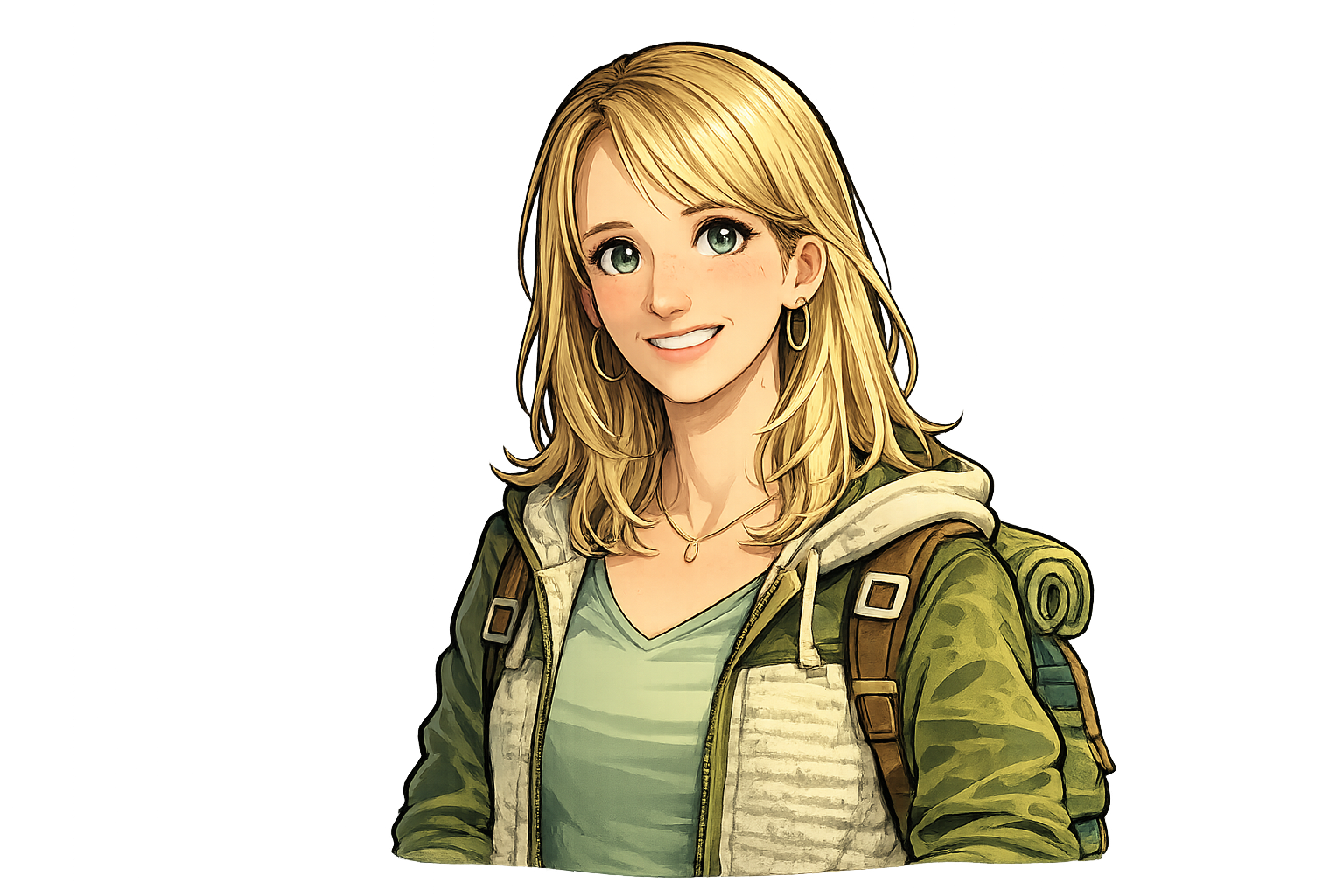
I'm Michelle, a product leader and a Lenny subscriber. I built this for Joshua and Jackson, my two boys. They kept asking what I was listening to, and I never had a good answer. Now I do.
Little Lenny's is an independent fan project created by Michelle Wright in May 2026 for the Lenny's x Replit Build-a-thon. It is not affiliated with Lenny Rachitsky, Lenny's Newsletter LLC, or Replit. All episode content is generated from publicly available podcast transcripts. Lenny's Newsletter and all associated trademarks belong to their respective owners.